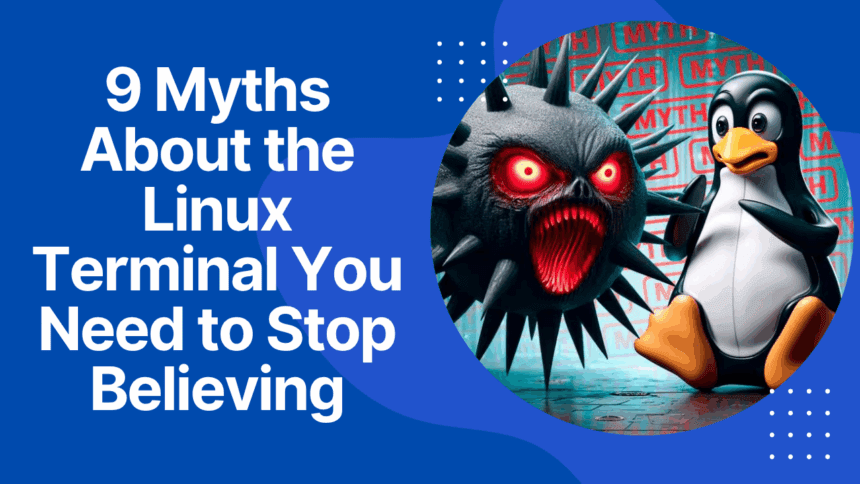
Are you one of those individuals that gets a cold sweat just thinking about opening up a Linux terminal?
Do you envision yourself accidentally destroying your entire system with the wrong misplaced character?
If so — you’re not the only one. But you’re also falling for some seriously old-school myths.
I’ve been using Linux for nearly a decade. In that time, I’ve heard every terminal myth in the book.
Some come from old tech lore. Others from Hollywood’s dramatic hacking scenes. Many just from well-meaning but misinformed advice.
So, let’s walk through the biggest myths about the Linux terminal — and debunk them — so you can stop being afraid of one of the most powerful tools in computing.
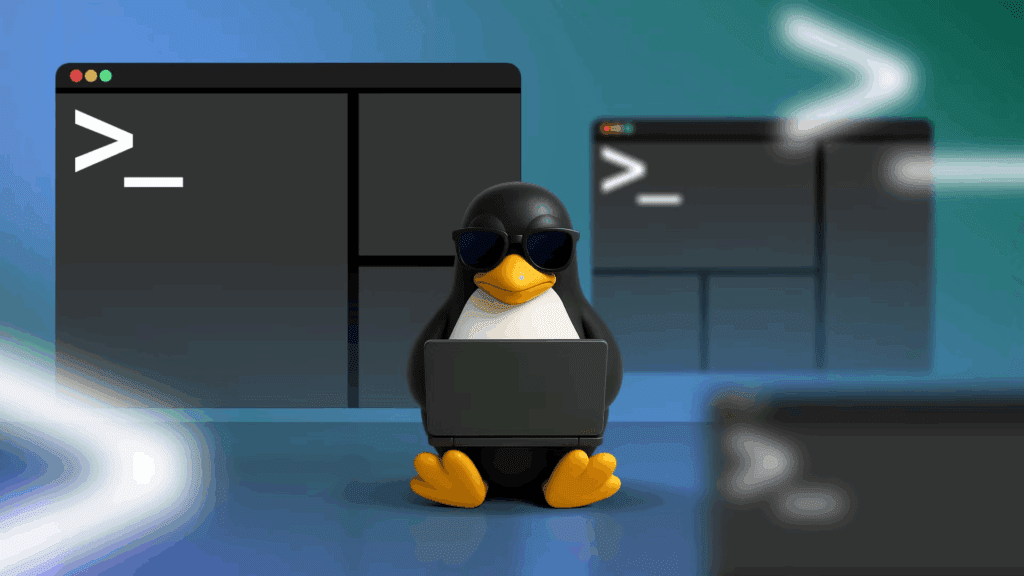
1. You Have to Be a Programmer to Work with the Linux Terminal
Let’s begin with the elephant in the room: you don’t have to be a programmer to work with the Linux terminal.
Yes, programmers adore it. But so do system admins, hobbyists, and everyday consumers.
You can use the terminal to accomplish basic, practical tasks: copying files, renaming directories, installing applications, checking system resources — none of which calls for any programming expertise.
Actually, most Terminal commands are just texted versions of simple actions — just like pressing a button in a graphical interface. You’re just entering them instead.
2. The Terminal Is Needed for All of What You Do on Linux
This misconception probably held some truth back in the 90s, but it’s entirely untrue today.
New Linux desktops provide you with graphical applications for nearly everything: file managers, settings panels, program installers, media players, calculators — you get the idea.
Power users opt to use the terminal for some things because it’s quicker — but for normal use, you can use the GUI as you would on Windows or macOS.
3. Graphical Apps Made the Terminal Obsolete
On the other hand, others say the terminal is now obsolete. Not so.
Even with the advent of pretty GUIs, the Linux terminal remains one of the most powerful and versatile programs you can employ. New terminal emulators and CLI tools continue to be created, for that matter.
Want to automate boring repetitive tasks? Process massive files in bulk? Chain commands together in innovative ways? The terminal tends to be the most effective way to do it.
4. The Terminal Looks Dull and Retro
If your terminal appears dull — that’s a design choice, not a limitation.
Current terminals are very customizable. You can modify color schemes, include transparency and blur effects, utilize fashionable fonts, and even build gorgeous, dynamic prompts with things such as Oh My Zsh or Starship.
Some other entertaining CLI tools include:
- fastfetch — shows system information with ASCII art
- cmatrix — Matrix rain effect in a cool way
- htop — colorful system monitor
- asciiquarium — converts your terminal into an ASCII aquarium
Your terminal can be as neat and clean as you’d like.
5. The Terminal is Only for Advanced Users
There are numerous people who steer clear of the terminal thinking that it’s “only for experts.” However, the hardest part is actually becoming comfortable with it.
Most commands in the terminal are rather logical. The ideas aren’t inherently more difficult — just different from point-and-click systems.
Begin small: experiment with using the terminal to change directories or work with files. You’ll soon be confident — and before you know it, you’ll be at home with this extremely versatile tool.
6. The Terminal Syntax Is Gobbledygook
Terminal commands might at first glance appear to be mystical. But there’s a very logical system behind them:
cssCopyEdit[command] [options] [arguments]
For instance:
nginxCopyEditsudo apt install firefox
Translation:
- sudo — execute with superuser privileges
- apt — the package manager
- install — the operation to perform
- firefox — the application to install
Most command names are just abbreviations:
ls = list, cd = change directory, mv = move, cp = copy, etc.
After you learn the layout, it no longer resembles “gobbledygook” but begins to make sense.
7. You Must Memorize Hundreds of Commands
Nope. You don’t have to memorize all commands — any more than you memorize all the menu items in graphical programs.
You’ll automatically memorize the commands you employ on a daily basis. To everything else, you might resort to:
- The man command (in-built manuals)
- Useful cheat sheets
- Web tutorials (the Arch Wiki is excellent)
I most likely use 20–25 commands most of the time — and that’s too many.
8. The Terminal Compels You to Read a Great Deal of Text
Yes — occasionally the terminal scrolls out a great deal of text. But you typically won’t need to read all of it.
For instance, when you install software, the terminal displays detailed progress — much more than a GUI’s little progress bar. That does not imply that you need to read every line.
You can also use flags like --quiet or --verbose to determine how much output you receive.
Let’s put it this way: the terminal provides you with as much info as you like — but you don’t have to take it all in unless you’re debugging.
9. You Only Need One Typo in the Terminal to Ruin Your System
This is perhaps one of the largest concerns — but actually, it’s very unlikely to occur.
If you type a command incorrectly, the terminal simply gives an error:
nginxCopyEditsudo app install firefox
Result: command not found. No damage has been done.
Now — yes, it is theoretically possible to type something malicious (such as sudo rm -rf /), but this would take highly intentional action and numerous prompts on current systems.
Apply common sense. Learn what a command does before you execute it — particularly with sudo. If you do this, there is no reason to be afraid of the terminal.
Final Thoughts
The Linux terminal is not some mysterious, magical device exclusive to hackers in hoodies.
It’s just another method of communicating with your computer — one which just so happens to be extremely powerful and versatile.
Also Read : How to Fix Samsung Tablet Charging Issues: Lightning Bolt Icon But Not Charging