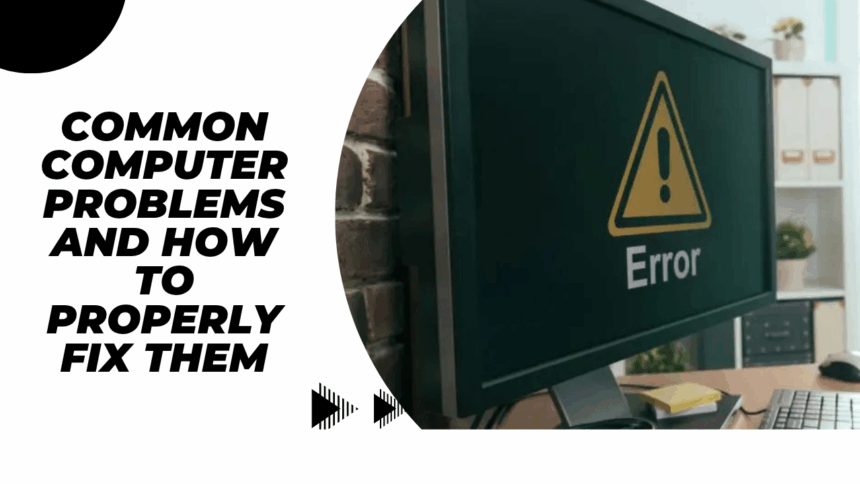
If your computer isn’t working properly, you’re not alone. From slow performance to frozen screens and network issues, many of these common problems are actually easy to fix—no tech expert required.
This manual provides the most common computer problems and step-by-step guides to solve them easily and quickly.

Common PC Issues That You May Face
The following are the most common issues users complain about:
- Computer will not start: This may be due to a system error, a botched update, or system file corruption.
- PC overheating: Resource-consuming background programs or excessive use may lead to your computer overheating.
- No internet connection: Old Wi-Fi drivers or network misconfigurations usually prevent access.
- Slow performance: Malware, low storage, or corrupted registries can seriously slow down your system.
- Frozen screen or unresponsive apps: Usually caused by corrupted program or system files.
- Strange noises: Clicking or buzzing could mean hardware failure.
Now, let’s go through each issue in detail and find out how to correct them.
1. PC Overheating
How to Fix:
- Press Ctrl + Shift + Esc to launch Task Manager.
- Switch to the Performance tab and find resource-intensive apps.
- Click End Task after selecting them.
- Remove unnecessary programs or upgrade them with lesser equivalents.
For repetitive overheating, try cleaning the hardware or cooling pads. Find out more on how to repair overheating problems.
2. Frequent Restarting
This is usually a result of low RAM or driver incompatibility following an update.
Solutions:
- Update all drivers for the system.
- Remove newly installed programs that make the system unstable.
- Boot in Safe Mode to resolve the issue.
- If nothing else works, reset your PC.
3. Network Connectivity Issues
Wi-Fi is connected but no internet? Try this:
- Restart your PC and router.
- Inspect and re-plug Ethernet cables.
- Disable the firewall temporarily to check if it’s blocking the connection.
4. Blue Screen of Death (BSoD)
These errors are caused by failing drivers, conflicts between hardware, or system corruption.
Common BSoD Codes:
| Code | Meaning |
|---|---|
| 0x0000004E | Corrupt system files |
| Wdfilter.sys | Windows Defender Firewall conflict |
| 0xc0000001 | Boot sector problems |
| 0x0000011A | Incompatible or bad drivers |
Solution: Usually, a PC restart solves the problem. For repeating errors, you might need to update or roll back drivers, or run System Restore.
5. Windows Update Problems
If updates don’t work, you’ll miss out on bug fixes and security patches.
Common Error Codes:
| Error Code | Explanation |
|---|---|
| 0x80072EE4 | Services required are not running |
| 0x800703e6 | Server or update client problem |
| 0x800f0986 | Damaged system files |
| 0x80080008 | Broken update components |
Quick Fix:
Run the Windows Update Troubleshooter, and ensure your PC is connected to the internet stably.
6. USB Port Not Working
It is not uncommon for power-saving mode to turn idle USB ports off.
To fix it:
- Press Win + R, enter
powercfg.cpl, and click Enter. - Click Change plan settings > Change advanced power settings.
- Expand USB settings and untick USB selective suspend.
- Click Apply, then OK. Restart your PC.
7. Bluetooth Not Working
From lagging to missing configurations, Bluetooth can misbehave due to driver problems.
Try:
- Running the Bluetooth troubleshooter.
- Updating your Bluetooth drivers.
- Verifying if the Bluetooth service is running.
Common Errors:
| Problem | Likely Cause |
|---|---|
| Not detecting devices | Faulty drivers |
| Keeps turning off | Disabled Bluetooth service |
| Volume control not working | Driver compatibility issues |
| Missing settings | Outdated or faulty drivers |
| Devices not connecting | Pairing or service error |
8. Strange Noises or Beeping
This may be a hardware problem.
Steps to Diagnose:
- Go to Settings > Troubleshoot > Other troubleshooters.
- Run hardware-related troubleshooters for audio, video, and so on.
- Verify whether your PC has the right power settings.
- In case of persistent issues, refer to a technician.
9. Slow Performance
Your PC slows down over time. It may be due to too many startup applications, old drivers, or low storage.
Quick Fix:
- Press Win + I, navigate to Apps > Startup.
- Turn off startup apps that are not required.
- Also, scan for viruses, remove temporary files, and upgrade hardware if necessary.
10. High CPU Usage
Too many background applications consume system resources.
Fix it by:
- Visit Settings > Apps > Installed apps.
- Click 3-dot menu > Advanced options.
- Change Background apps permission to Never.
- Do it for other unnecessary apps and restart.
11. Battery Life Issues (Bonus)
Too many users experience poor battery life following a Windows update.
What to Look for:
- Check recent updates that could have impacted performance.
- Perform a battery health check.
- Turn off apps running in the background.
- Reinstall Windows only if the issue continues.
Final Thoughts
These are some of the most prevalent issues among PC users—and in the majority of instances, they may be addressed without expert assistance. If the issue continues even after troubleshooting, it may be time to go to an authorized service center or upgrade your device.
Also Read : How to Fix a Lenovo Laptop That Keeps Restarting: A Comprehensive Guide