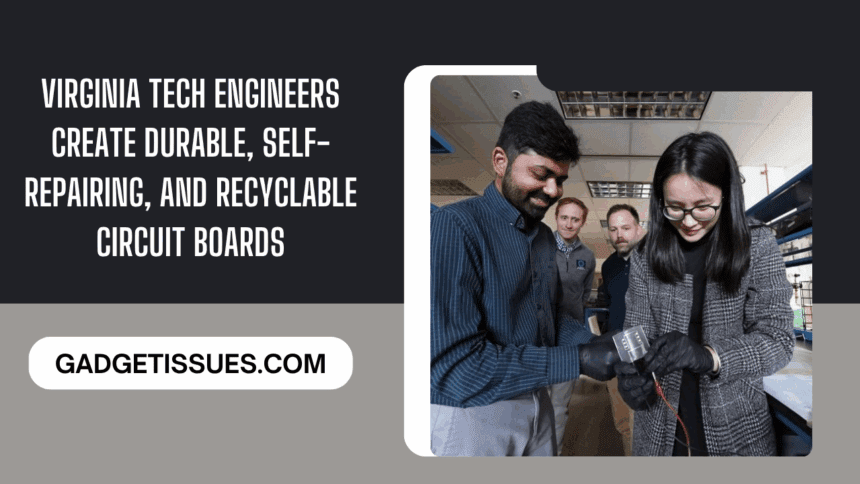
Engineers at Virginia Tech have developed a new type of circuit board that can heal itself after damage, reshape when heated, and be fully recycled—an innovation that could revolutionize the lifespan and sustainability of electronic devices.
The research team infused these boards with liquid metal droplets and built them using a special polymer called vitrimer. Unlike traditional epoxy-based materials that are rigid and impossible to reprocess, vitrimer combines strength with flexibility. This means the boards can be repaired or reshaped without losing their electrical performance.
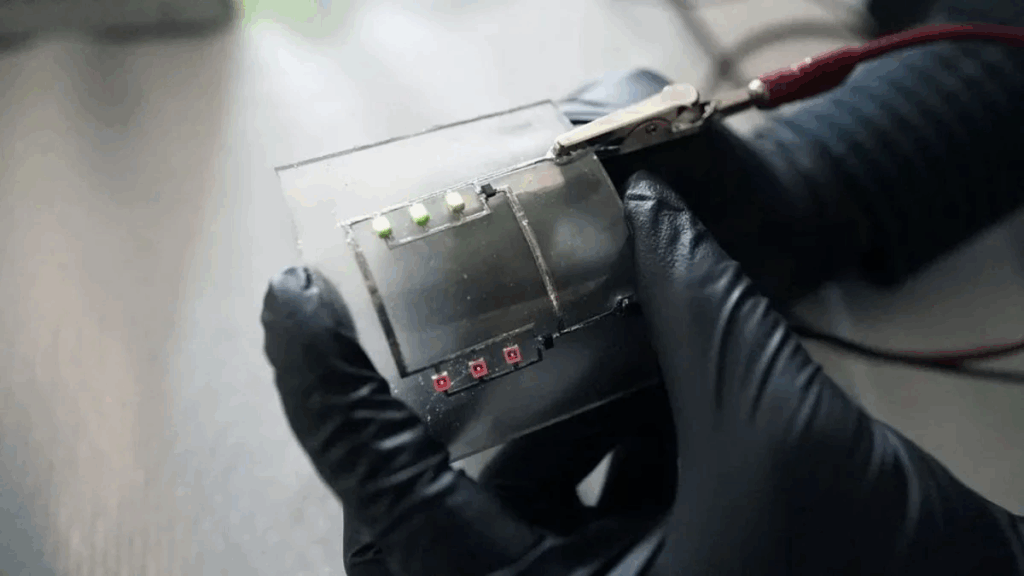
According to a study published June 1 in Advanced Materials, blending vitrimer with just 5% liquid metal by volume nearly doubled the material’s strain-at-break, or stretchability, compared to vitrimer alone. In practice, that makes the boards far more durable under stress.
“Modern circuit boards simply cannot do this,” said Josh Worch, co-lead author of the study.
The liquid metal droplets do more than improve stretchability—they also replace conventional wiring. These flexible conductors keep the board functional even after severe damage. Using a rheometer, researchers showed that the material could return to its original shape when heated to 170–200°C, something conventional thermosets can’t achieve.
Tackling E-Waste Head-On
Electronic waste is an escalating global problem. A 2024 UN report revealed that e-waste has nearly doubled in just 12 years—from 34 billion kilograms to 62 billion kilograms. Traditional circuit boards are a big contributor to this waste because they use thermosetting plastics that can’t be recycled. Even though old boards contain valuable metals like gold, they often end up in landfills because breaking them apart is so challenging.
The vitrimer-based design solves this issue by making it easier to separate and reuse components. If a board is damaged, it can simply be reshaped and reassembled.
“Even if the board is damaged, electrical performance will not suffer,” said Michael Bartlett, another co-lead author of the study.
The team envisions this material being used in all kinds of electronics—phones, laptops, TVs, and wearables—ushering in a more circular approach to manufacturing. While there’s still work to do to improve recovery of some components, the researchers say this is a critical step toward reducing e-waste and building greener devices.
If successful, these self-healing circuit boards could change not just how electronics are made, but how they’re repaired and recycled—keeping more devices out of landfills and extending their useful life.
Also Read : 10 Tech Troubleshooting Tips to Fix Your Gadgets